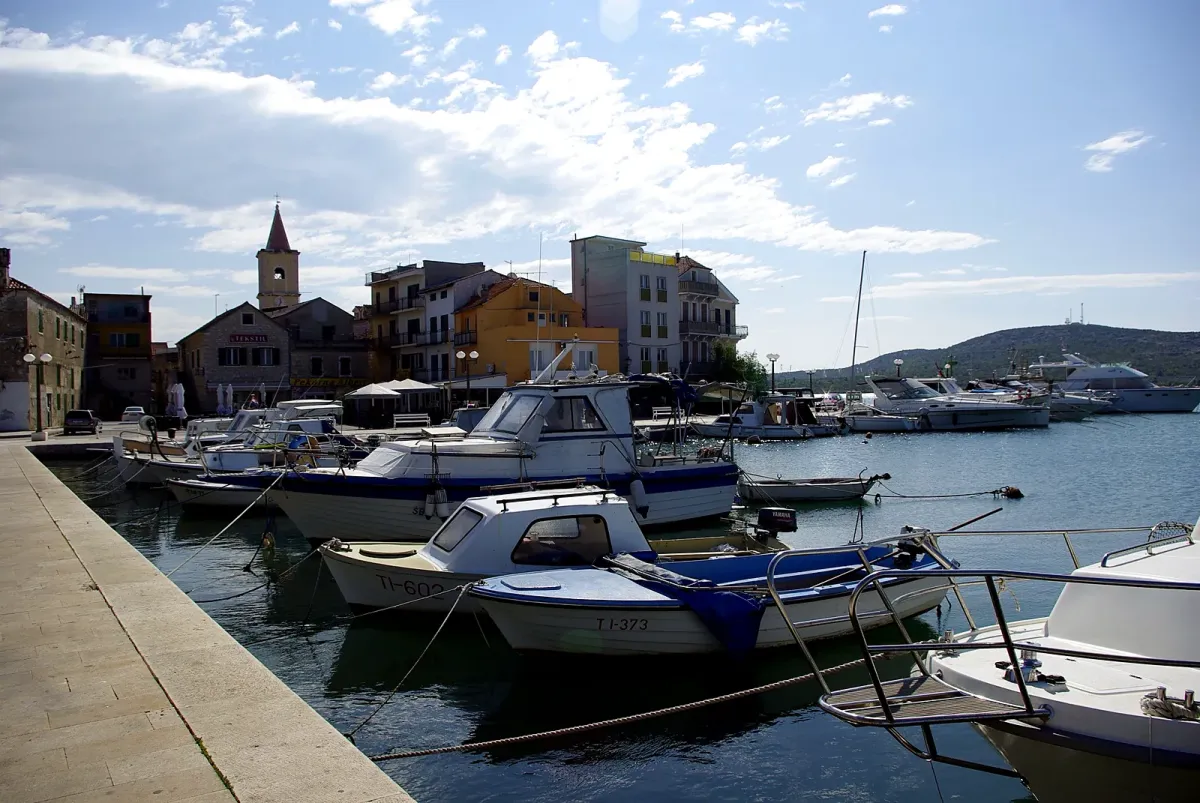
Pirovac is a small fishing town on the Šibenik Riviera, tucked into a deep, sheltered bay about 26 km north of Šibenik. It has fewer than 2,000 residents, a stone old town on the water, family beaches with shallow sea, and Croatia's largest natural lake just behind the hills. Until 1930 it was officially called Zloselo, which roughly means "bad village". Today it is one of the most relaxed places to spend a summer holiday in North Dalmatia.
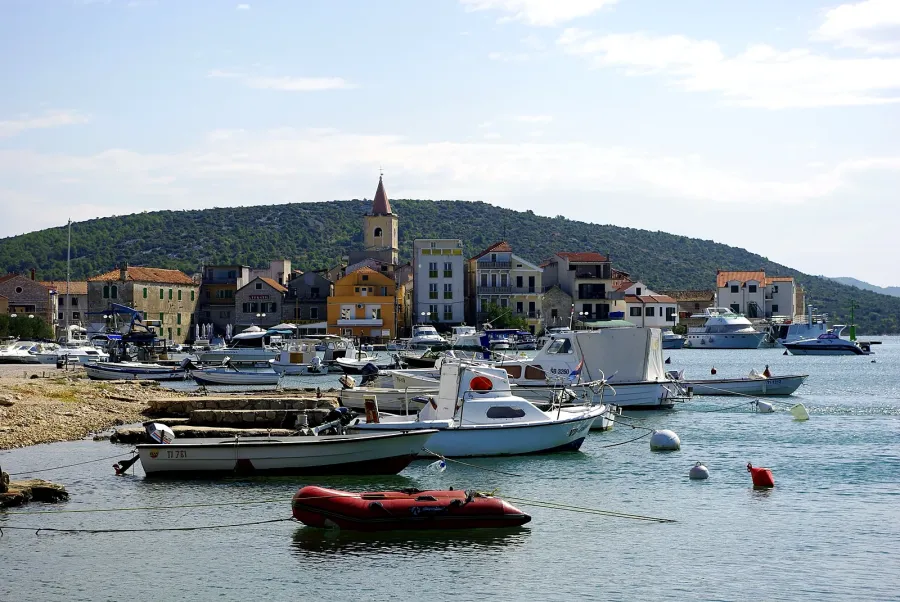
The area was settled long before the town had a name. Remains of a Roman villa from the 1st century have been found at nearby Ivinj. The village first appears in records in 1298 as Zlosela, when it belonged to the Šubić family, one of the most powerful medieval Croatian noble houses. Later it passed to the Bishopric of Šibenik and to Šibenik's noble families.
The biggest change came in 1503, when the Šibenik nobleman Petar Draganić bought the estate. With Ottoman raids pushing towards the coast, he fortified the small islet the village stood on. In 1505 he built the town walls and the Village Gate (Vrata sela), and in 1506 the church of St George. Parts of the walls survive, and the gate still leads into the old town today. During one of the wars, the villagers fled across the water to Murter and only came back after peace in 1573.
The old town was built on that small islet. Old photos show the sea once came almost up to the houses; the waterfront you walk along today was filled in later. In 1930 the village dropped the unlucky name Zloselo and took the older name Pirovac.
Pirovac's beaches are mostly pebble with some sand, and the bay keeps the water shallow and calm in many spots. Here is how they compare.
The main town beach, on the northwest side of Pirovac. It has held the Blue Flag for years thanks to its clean water. The sea gets deep slowly, which makes it the first choice for families with small children. There are sunbeds, cafés, ice cream, souvenir stalls, sports activities and even massages, and when the sun gets too strong you can move into the pine forest right behind the beach.
Lolić continues straight into the beach of Hotel Miran, which is open to everyone, not only hotel guests. The grounds are well kept and shaded by pines, and there is a pool, a café, a beauty salon and tennis courts. With so much for children to do, it is another easy pick for families.
Starine runs for more than a kilometre from the town centre southeast to Vrilo cove. It is a long, mixed stretch with several concrete platforms, which older kids love for jumping into the sea. You can rent jet skis, pedal boats and small motorboats here, and there are a few cafés for a coffee or an evening cocktail.
If you want sun all day, Porat is the place: there is almost no shade. The cove is mostly rocky with a few sandy patches, and it is one of the spots where you can swim with your dog. Walk a little further along and you can usually find a quiet corner to yourself.
Beyond the named beaches, the bay has plenty of small rocky coves with very clear water. They have no facilities, so bring water, shade and water shoes, but in July and August they are the easiest way to escape the crowds.
The southern arm of Pirovac bay, Makirina, holds one of the richest deposits of healing mud and silt in Croatia, both in quality and in quantity. The beach itself is natural, with no sunbeds or umbrellas. Visitors cover themselves in the mud, let it dry in the sun and then rinse off in the sea. Above the bay there is a viewpoint where you can see the coast on one side and Lake Vrana on the other, so it is worth combining a swim with a short walk up.
Just behind Pirovac lies Lake Vrana (Vransko jezero), the largest natural lake in Croatia and an important bird reserve with more than 200 species recorded. It is about 5 km from town and perfect for a morning or late-afternoon trip. Flat cycling paths run along the shore, and the Kamenjak viewpoint above the lake gives one of the best panoramas in Dalmatia: the lake, the sea and the islands all in one view.
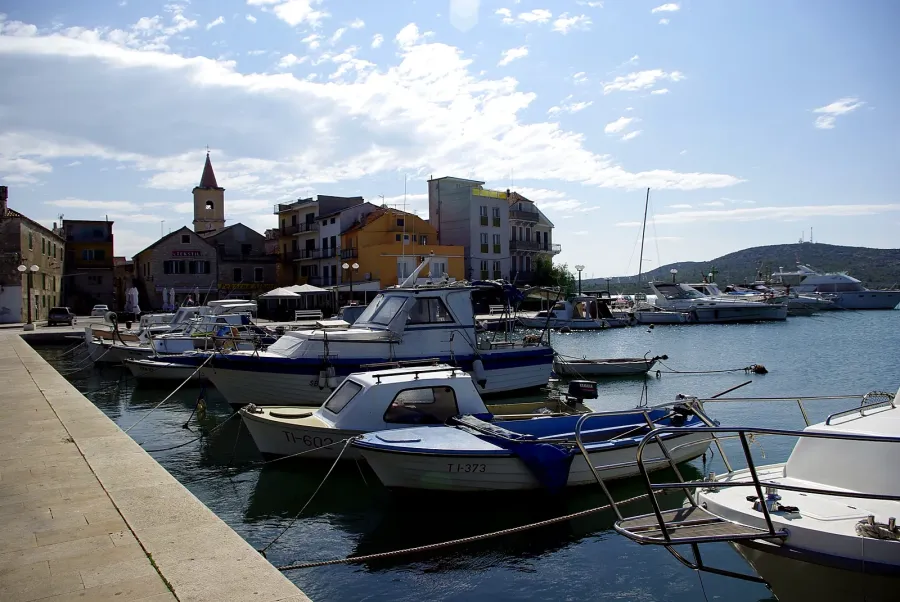
Pirovac's old core is small enough to explore in half an hour, which is part of its charm. Start at the Village Gate from 1505, walk past the Draganić-Vrančić castle and the parish church, and finish on the waterfront promenade. In the evening the riva fills with families, fishing boats come back in and the cafés along the harbour are the best spot to watch the sunset over the bay.
Ask locals where to eat and many will send you a few minutes out of town. Restoran Marin is about 3.5 km from Pirovac, roughly a five-minute drive, and it is known across the area for lamb and suckling pig roasted on the spit. Order it with roast potatoes, a fresh salad and homemade bread, and if you prefer the sea, the mussels are a good choice too. Lamb under the peka (slow-cooked under an iron bell) is also on the menu. There is a big shaded terrace, an indoor dining room and plenty of free parking. You usually do not need a reservation, but in high summer it gets busy, so call ahead if you are a large group.
In Pirovac itself, the restaurants and konobas around the harbour focus on fresh fish, seafood pasta and local olive oil and wine.
July and August are the heart of the season. The sea is at its warmest, the evenings are lively and the beaches are full. If you travel with children, June and September are the sweet spot: the sea in the deep bay is already warm, the days are long and sunny, and there are far fewer people on the beaches and in the restaurants. Spring and late autumn are quiet and mild, ideal for cycling around Lake Vrana and walking, though many beach bars close outside the season.
If a friend asked us how to spend a first holiday in Pirovac, we would say: keep it slow. Spend the mornings on the beach, take an evening walk through the old town and along the harbour, and plan at least one long dinner of spit-roasted lamb. Add one day for Lake Vrana and one for Krka or the islands, and you will have seen the best of the area without rushing.
Pirovac is about 76 km from Split Airport and around 107 km from Split city centre. If you are flying in, see our Split Airport to Pirovac transfer, and if you are coming from the city or the ferry port, the Split to Pirovac transfer. For more ideas nearby, have a look at our best day trips from Split.
Yes, especially if you want a calm base rather than a party town. It has family-friendly beaches, a small historic old town, warm sea and quick access to Lake Vrana, Krka and the Kornati islands.
Lolić. It is a Blue Flag beach with pebbles and sand, shallow water and shade in the pine forest. Miran beach next to it is a good second choice.
In Makirina, the southern arm of Pirovac bay. It is one of the richest deposits of healing mud in Croatia, on a natural beach with no facilities.
Zloselo was the village's name for centuries. In 1930 it was officially changed to Pirovac, an older name for the area.
July and August for the warmest sea and the liveliest atmosphere. June and September are best for families: the sea is warm and the beaches are much quieter.